
Plumbing
How to unclog a drain
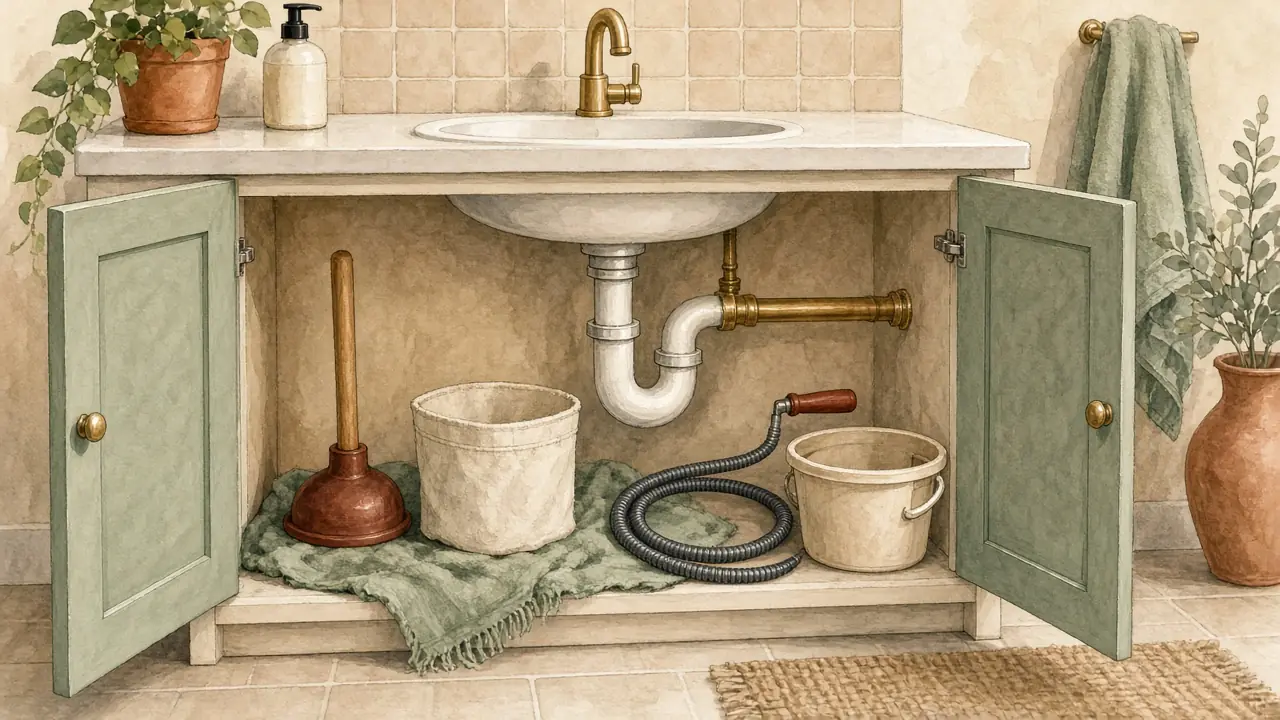
Most household clogs sit close to the fixture: hair and soap in the pop-up, grease in the P-trap, or a soft plug a few feet down the branch line. Work from gentle to aggressive—plunger, then a plastic hair tool, then open the trap, then a hand auger—so you do not turn a simple clog into a scratched finish or a chemical hazard. Skip the “pour and wait” chemical step whenever you can.
- Do not mix chemical drain cleaners with each other, with bleach, vinegar or another household product. Mixing can release dangerous gas. If a label product is already in the pipe and did not clear the clog, do not plunge—caustic splashback can burn skin and eyes. Bail standing water carefully with gloves and eye protection, or call a plumber.
- Septic systems: the US EPA says not to pour drain cleaners, pesticides, paints or similar liquid wastes down the drain; they can harm the bacteria that treat wastewater and may damage pipes and tanks. Prefer mechanical clearing.
- Boiling water: do not dump a kettle of boiling water into a cold PVC trap or acrylic/fiberglass fixture—thermal shock can crack plastic or glaze. Hot tap water is enough for a grease soften after the clog is open.
- Wear gloves and eye protection. Put a bucket and towels under the trap before you loosen slip nuts.
1. Confirm it is a local clog
Run water in nearby fixtures:
- Only one sink, tub or shower is slow → local clog (this guide).
- Several fixtures, or a toilet and a tub together → possible branch or main-line problem; stop and call a plumber before you flood a floor.
- Gurgling in one drain when another drains → venting or shared-line issue; still a pro job if a plunger does not help quickly.
Pull the stopper or lift the pop-up if you can and remove the obvious hair mat with gloves or needle-nose pliers. Many “clogs” end here.
2. Plunge (cup plunger)
- Remove the stopper if it blocks a seal. On a double kitchen sink, seal the other side with a wet rag or an expansion plug.
- On a tub, cover the overflow plate with a wet rag so pressure does not escape upward.
- Add enough water to cover the plunger cup.
- Seat a cup plunger, push and pull firmly 15–20 times without breaking the seal, then break the seal and check flow.
- Repeat a few rounds. If water still stands after honest plunging, move on—do not keep slamming a dry cup.
Never plunge after chemical cleaners have been poured.
3. Hair clog tool (plastic strip)
For bathroom sinks and tubs, a flexible plastic hair-catcher strip (Zip-It–style) often hooks the clog sitting on the pop-up or just past it:
- Push the strip into the drain, barbs angled to catch on the way out.
- Pull slowly; wipe hair into a trash bag. Repeat until little comes up.
- Run hot tap water to flush residue.
Do not force a stiff metal wire past a trap you have not opened—you can scratch chrome or punch a thin washer tailpiece. If the strip stops at the same depth every time, the clog may be in the trap (next step).
4. Clean the P-trap
The P-trap is the U-shaped section under a sink (or the curved trap arm on many tubs accessible from an access panel). Grease, debris and jewelry collect there.
- Put a bucket under the trap. Wear gloves.
- Loosen the slip nuts by hand or with channel-lock pliers padded with a rag. Turn the nuts the direction that loosens them—do not crush thin metal nuts.
- Lower the trap and dump the contents into the bucket. Fish out the clog.
- Check the trap arm toward the wall with a finger or a short brush; clear sludge.
- Reassemble with the washers seated flat. Hand-tighten, then a gentle snug with pliers—overtightening cracks plastic nuts.
- Run water and check for drips. A small leak usually means a washer is cocked; take it apart and reseat.
If the trap was clean but the clog remains, the blockage is farther down the line.
5. Hand auger (drain snake)
A small hand auger (typically 1/4 in cable, 15–25 ft) reaches many branch clogs beyond the trap:
- With the trap still removed (easier feed), push cable into the wall pipe until you feel resistance.
- Tighten the set screw, crank while applying light forward pressure so the corkscrew tip bites or breaks the clog.
- Pull back slowly; wipe cable into a rag as it exits. Repeat until water flows freely when you temporarily refill the fixture.
- Reassemble the trap, flush with hot tap water, and confirm no leaks.
Hand-auger makers warn against forcing the cable—if it binds hard, reverse and retry rather than kinking the cable or punching a fitting. For toilets use a closet auger, not a sharp sink snake that can crack porcelain (see how to fix a clogged toilet). Main-line clogs need a larger drum machine and often a camera.
When to call a plumber
- Multiple fixtures back up, or sewage rises in a floor drain or tub when you flush.
- You smell persistent sewer gas after the trap is correctly refilled with water.
- The clog returns within a few days (grease coating, roots or a belly in the line).
- Cast-iron or old galvanized lines, or a clog past the reach of a hand auger.
- Chemical cleaner is already in the pipe and you cannot work safely.
Related plumbing fixes: how to fix a garbage disposal, how to fix a clogged toilet, how to fix a running toilet, how to fix a leaky faucet, and more in the plumbing section. For fixture replacement budgets, see water heater replacement cost. For a damaged main lateral, see sewer line replacement cost.
Sources
- US EPA, Frequent questions on septic systems: do not pour drain cleaners, grease, oils, pesticides, paints or similar liquid wastes down the drain; they can harm treatment bacteria and the environment.
- US EPA, Septic tank additives fact sheet (PDF): chemical line/drainfield cleaners (acids, lye and similar) can interfere with treatment and damage pipes and tanks; EPA does not recommend septic additives for routine use.
- Consumer Reports, How to choose and use a drain cleaner: try a plunger and snake first; never mix drain cleaners or use them with bleach; protect skin and eyes; PHCC advice on cup vs flange plungers and mechanical clearing.
- RIDGID, K-25 Hand Spinner: hand spinner sized for about ¾–2½ in drain lines; works through traps and bends in sinks, tubs, lavatories and similar fixtures (manufacturer product guidance for cable drain cleaning).
- RIDGID, Pipe & drain catalog sheet (PDF): hand spinners vs closet/toilet augers; vinyl guard note for porcelain on toilet augers—use a closet auger for toilets, not a sharp sink cable.
Questions worth answering
Should I use chemical drain cleaner?
Mechanical methods (plunger, hair tool, trap, auger) are safer for pipes and for you. The EPA advises against pouring drain cleaners and similar chemicals into septic systems because they can harm the bacteria that treat wastewater and may damage components. Never mix two cleaners, or a cleaner with bleach or vinegar—reactions can release hazardous gas. If a chemical product already failed, do not plunge: splashback can burn skin and eyes.
Cup plunger or flange plunger?
Use a flat cup plunger for sinks, tubs and showers. A flange (toilet) plunger has an extra rubber flap sized for a closet bend—wrong seal on a sink usually means weak pressure. Cover the overflow on a tub or the second drain on a double sink with a wet rag so the plunge pressure hits the clog.
When should I call a plumber?
Call a pro if more than one fixture backs up at once (possible main-line clog), if sewage is coming up a floor drain, if you smell sewer gas after the trap is open, if the clog returns within days, or if you have already poured caustic cleaner and cannot safely work. Tree roots and collapsed lines need camera and professional equipment.