
Plumbing
How to fix a running toilet
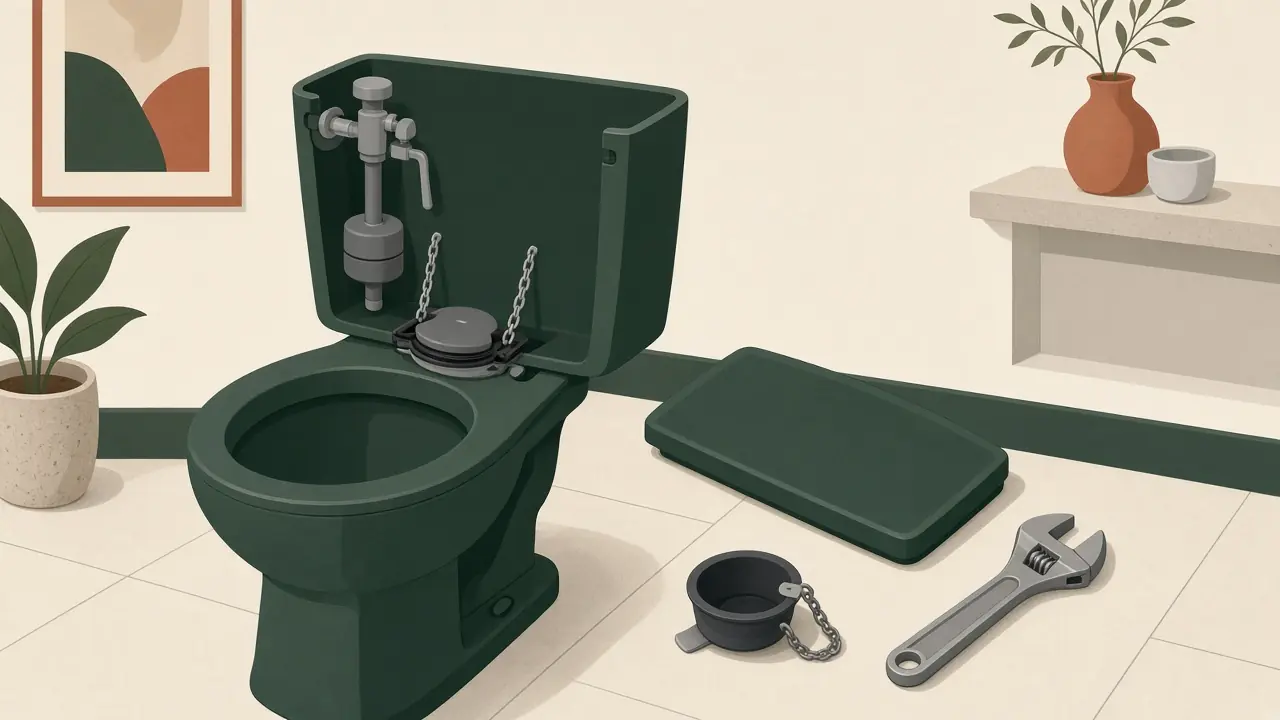
A toilet that keeps running, or refills on its own every so often, is almost always one of two parts inside the tank: the flapper (or the flush valve it seals against) letting water leak into the bowl, or the fill valve letting the tank fill too high so water spills down the overflow pipe. Two quick tests tell you which, and most fixes need no tools beyond your hands.
Before you start: the water in the tank is clean supply water, but the bowl isn’t, so wear gloves if you reach into the bowl. Tank lids are heavy porcelain and crack easily; set the lid on a towel on the floor. Hand-tighten plastic nuts. Fluidmaster warns that overtightening can crack the fill valve or tank and cause flooding.
Turn off the water
The shutoff valve is usually on the wall or floor behind the toilet. Turn it clockwise to close it, then flush to empty most of the tank. If the valve won’t turn or starts leaking, don’t force it. Shut off the water to the house instead and see “When to call a plumber” below.
Find the cause: two tests
1. Is water going down the overflow pipe? Take the lid off and watch the tank fill after a flush. The overflow pipe is the open tube in the middle. If the water rises until it spills into the top of that pipe, the fill valve is the problem (see “Fill valve and water level”).
2. Is water leaking into the bowl? Use the EPA’s dye test: add a few drops of food coloring to the tank, don’t flush, and check the bowl after 10 minutes. Color in the bowl means water is getting past the flapper. Flush afterward so the dye doesn’t stain. Fluidmaster’s version: with the tank full, shut off the water, mark the water level in pencil, and see whether it drops over 10–15 minutes.
Leaks matter even when they’re quiet. The EPA notes that a worn flapper can silently leak thousands of gallons a year, and New York City’s water department warns that water running through an open fill valve can waste up to 4,000 gallons a day.
Flapper and chain
Check the chain first. It joins the flush handle’s lever to the flapper.
- Too tight, and it holds the flapper slightly open, so the toilet runs.
- Too loose, and it can get trapped under the flapper, or the flapper won’t lift fully.
- Fluidmaster’s setting: clip the chain to the lever hole directly above the flapper, with about ½ in of slack (a small “J” shape) when the flapper is closed.
Clean or replace the flapper. Turn off the water and flush. Wipe the flapper and the rim it seals against (the flush valve seat) to remove buildup. If the rubber is warped, stiff, cracked or slimy, replace it:
- Unhook the chain from the lever.
- Pull the flapper’s ears off the two pegs on the sides of the overflow pipe, or slide off the ring if yours has one.
- Fit the new flapper the same way, reconnect the chain with ½ in of slack, turn the water back on and test.
Flappers come in 2 in and 3 in sizes to match the tank’s drain opening, so take the old one to the store. The EPA suggests replacing flappers at least every five years.
If a new flapper still fails the dye test, the flush valve seat itself may be damaged. Fluidmaster’s next step is replacing the flush valve, which means taking the tank off the bowl. That’s a bigger job; see below.
Fill valve and water level
If water spills into the overflow pipe, the tank is filling too high:
- Set the water level. Fluidmaster recommends a level about ½ in below the top of the overflow pipe. On a Fluidmaster-style valve with a float cup, turn the adjustment screw on top counterclockwise to lower the level or clockwise to raise it (eight turns moves the float about ½ in). Older valves with a ball on an arm adjust differently, so check the maker’s instructions.
- Flush out debris. If the valve won’t shut off even with the float lowered, grit may be holding it open. With the water off, Fluidmaster’s instructions have you remove the valve’s top cap, hold a cup upside down over the opening and briefly turn the water on to flush it out.
- Replace the valve if it still runs. Fill valves are sold as complete kits with instructions. Fluidmaster also suggests replacing the water supply connector at the same time if it’s worn or more than five years old.
Refill tube: the small tube from the fill valve should clip to the overflow pipe so it refills the bowl after each flush. Fluidmaster warns not to push it down inside the overflow pipe, which can siphon water out of the tank and waste a lot of it. Clip it so it sits above the opening.
Overflow pipe height: Fluidmaster’s instructions also require the top of the overflow pipe to be at least 1 in below the handle lever hole, and the “C.L.” critical-level mark on a new fill valve to sit 1 in above the top of the overflow pipe. The second point is a plumbing-code requirement that protects your drinking water.
When to call a plumber
- Water on the floor, or leaking from the bottom of the tank. Fluidmaster says to shut off the water right away. It can mean the tank bolts and washers need replacing.
- The shutoff valve won’t turn, won’t fully close, or leaks.
- The tank or bowl is cracked.
- The toilet still runs after a new flapper and fill valve, so the flush valve needs replacing. That means taking the tank off the bowl.
If you’d rather not do the repair yourself, New York City’s water department advises calling a licensed plumber; don’t let a leak run. Replacing a water heater instead? See water heater replacement cost for published price ranges and an estimator, or tankless water heater cost if you are thinking of switching. If the toilet won’t drain at all, see how to fix a clogged toilet. For a dripping tap, see how to fix a leaky faucet. More plumbing guides are in the plumbing section.
Sources
- Fluidmaster, How to fix a running toilet and How to install a toilet flapper.
- Fluidmaster, 400A fill valve installation instructions (PDF): water level, chain slack, refill tube, critical-level mark and troubleshooting.
- Fluidmaster, PRO57 flush valve instructions (PDF): shutting off the supply and overflow pipe height.
- US EPA WaterSense, Fix a Leak Week: dye test and flapper replacement.
- NYC Department of Environmental Protection, Toilet leak detection.
Questions worth answering
How do I know if my toilet is leaking silently?
Use the EPA's dye test: put a few drops of food coloring in the tank, don't flush, and check the bowl after 10 minutes. Color in the bowl means water is leaking past the flapper. Flush afterward so the dye doesn't stain.
How often should a toilet flapper be replaced?
The EPA's WaterSense program says to check flappers periodically and replace them at least every five years, because the rubber wears out.
Is a 2-inch or 3-inch flapper right for my toilet?
It depends on the size of the drain opening (the flush valve) in the bottom of the tank; flappers are made in both sizes. Measure the opening or take the old flapper to the store, and check the flapper maker's sizing guide.