
Plumbing
How to fix a clogged toilet
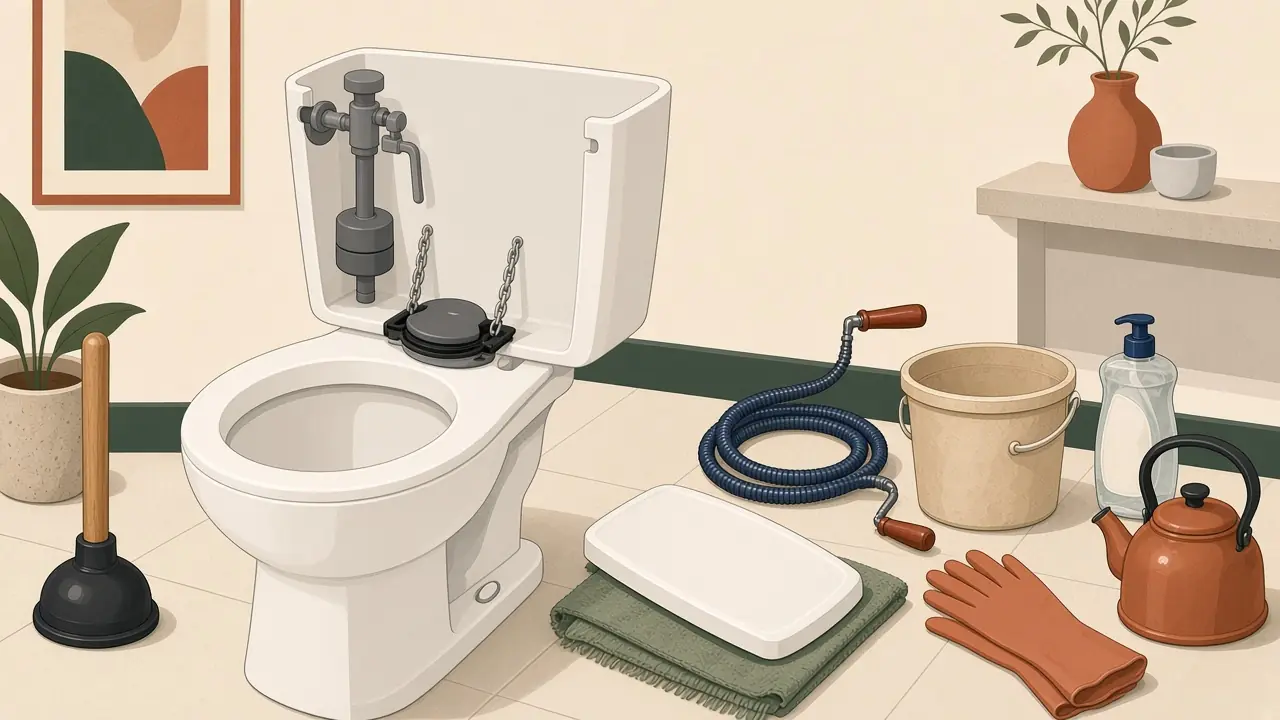
Most toilet clogs are too much paper or something that shouldn’t have been flushed, stuck in the curved trap built into the bowl. Stop the bowl from overflowing first, then work from gentle to stronger: a flange plunger, hot water and dish soap, then a closet auger. A plunger fixes most clogs. A closet auger handles the rest without scratching the porcelain.
Before you start: bowl water is dirty, so wear rubber gloves and put old towels on the floor around the toilet. Don’t keep flushing a toilet that won’t drain. Each flush adds more water to a bowl that can’t empty. If anyone has already poured a chemical drain cleaner into the bowl, don’t plunge or auger. Splashback can burn skin and eyes. See “When to call a plumber” below.
Stop the overflow
If the water is rising after a flush:
- Lift the tank lid and press the flapper down onto the drain opening at the bottom of the tank. That stops more water from running into the bowl.
- Close the shutoff valve on the wall or floor behind the toilet by turning it clockwise. American Standard says to turn off the water as soon as you notice the clog.
- If the bowl is full to the rim, bail some water into a bucket so you can plunge without it slopping over.
Use the right plunger
Use a flange plunger, the kind with an extra rubber sleeve that sticks out under the cup. The sleeve fits into the toilet’s drain opening and makes a seal. A flat cup plunger is made for sinks and tubs, so it won’t seal well in a toilet bowl (see how to unclog a drain).
Plunge it
- Make sure there’s enough water in the bowl to cover the rubber cup. Add some if needed, since you want to push water, not air.
- Put the plunger in at an angle so the cup fills with water, then fit the flange into the drain opening so the cup covers the hole completely.
- Push down gently for the first stroke to push out the air, then pump firmly in and out, keeping the seal. American Standard says to keep at it for 5 to 10 minutes.
- When the water starts to drain, take the plunger out, open the shutoff valve and flush once to test. If it’s still slow, repeat.
Try hot water and dish soap
If plunging alone doesn’t do it, American Standard suggests pouring a generous squirt of liquid dish soap into the bowl, followed by a pot of hot water that isn’t boiling. Let it sit for about 10 minutes, then plunge again. The soap helps a soft paper or waste clog slide. Never use boiling water, because a sudden temperature change can crack the porcelain. This won’t help if a toy, a phone or another solid object is stuck.
Use a closet auger
A closet auger (toilet auger) is a short, stiff cable inside a bent tube with a crank handle. It’s made to go through a toilet trap, and most have a vinyl or rubber guard so the tube doesn’t scratch the bowl. Don’t use a regular sink snake in a toilet. Its bare cable can scratch or chip the porcelain. Following RIDGID’s instructions for its K-6P toilet auger:
- Pull the crank handle up so the cable is pulled back into the tube.
- Put the bent end of the tube into the drain opening, tilting it so it goes in easily. The end of the tube must sit in the drain so the cable is supported and doesn’t whip around and hit the porcelain.
- Turn the handle clockwise while pushing down to feed the cable through the trap. Short in-and-out pushes help it get around the bend.
- Don’t force it. If the cable stops turning, keep spinning without pushing, or pull it back slightly. If it gets stuck, stop turning, pull back on the handle, and only turn it the other way briefly to free it. Forcing it can kink or break the cable.
- Pull the cable back while still turning clockwise, and keep the tube in the drain until the cable is all the way back in the tube. It often brings the clog out with it.
- Flush once to test, then rinse the cable and let it dry before you store it.
If the auger goes in all the way and the toilet still won’t drain, the clog is probably farther down the drain line.
What not to do
- Don’t use chemical drain cleaners. They often don’t work on a toilet clog, and then you’re left with a bowl of caustic water that you still have to plunge. Never mix drain cleaners with each other, with bleach or with vinegar, because some mixtures give off dangerous gas. The EPA advises against pouring drain cleaners into septic systems.
- Don’t flush over and over. Each flush can overflow the bowl.
- Don’t pour boiling water into the bowl.
- Don’t use a sink snake or a coat hanger. They scratch the porcelain and can push a solid object deeper.
- Prevent the next clog: only flush toilet paper and human waste. Wipes, even ones labeled “flushable,” paper towels, cotton swabs, floss and hygiene products belong in the trash. The EPA’s septic guidance makes the same point.
When to call a plumber
- More than one drain backs up at once, for example when you flush and water comes up in the tub or a floor drain. That can mean a clog in the main sewer line, which needs a plumber’s drain machine and often a camera.
- The auger can’t get past the clog or comes back with tree roots, or you know a solid object is stuck. Sometimes the toilet has to be taken off the floor to get it out.
- Chemical drain cleaner is already in the bowl. Tell the plumber which product it was.
- The toilet clogs again within days, or water is leaking around the base.
If the toilet now drains but keeps running afterward, see how to fix a running toilet. For sinks, tubs and showers, see how to unclog a drain. For a damaged main lateral, see sewer line replacement cost. More plumbing guides are in the plumbing section.
Sources
- American Standard, How do I unclog an American Standard toilet?: turn off the water, no repeated flushing, full seal over the trapway, 5–10 minutes of plunging, dish soap and hot (not boiling) water.
- RIDGID, K-6P toilet auger and its operator’s manual (PDF): guide tube in the drain, clockwise feed, don’t force the cable, how to free a stuck cable and pull it back.
- Kohler, Toilet troubleshooting (PDF): use a plunger and auger to clear blockages from the trap and waste line.
- US EPA, Frequent questions on septic systems: don’t pour drain cleaners down drains, and don’t flush non-degradable items.
- Consumer Reports, How to choose and use a drain cleaner: try a plunger and snake first, never mix drain cleaners or use them with bleach.
Questions worth answering
How do I stop a clogged toilet from overflowing?
Don't flush again. If the bowl is filling, take the tank lid off and push the flapper down onto its seat to stop water from entering the bowl, then close the shutoff valve behind the toilet by turning it clockwise. American Standard's first step is turning off the water, and it warns against repeated flushing.
How long should I plunge a toilet?
American Standard says to pump the plunger vigorously for 5 to 10 minutes with the cup sealed over the drain opening, then test with one flush. Repeat if the bowl still drains slowly.
Can I use chemical drain cleaner in a toilet?
We don't recommend it. Mechanical methods are safer. The EPA advises against pouring drain cleaners into septic systems, and if a chemical doesn't clear the clog you're left plunging or augering a bowl of caustic water, which can splash onto skin and eyes.
Will hot water and dish soap unclog a toilet?
It can loosen a soft clog. American Standard suggests a generous squirt of liquid dish soap followed by a pot of hot, but not boiling, water, left for about 10 minutes before you plunge again. Boiling water can crack porcelain.