
Topsoil calculator
Enter the area and how deep you're spreading to get cubic yards of topsoil or the number of bags. The defaults are 2 inches over a 20 × 15 ft patch before seeding.
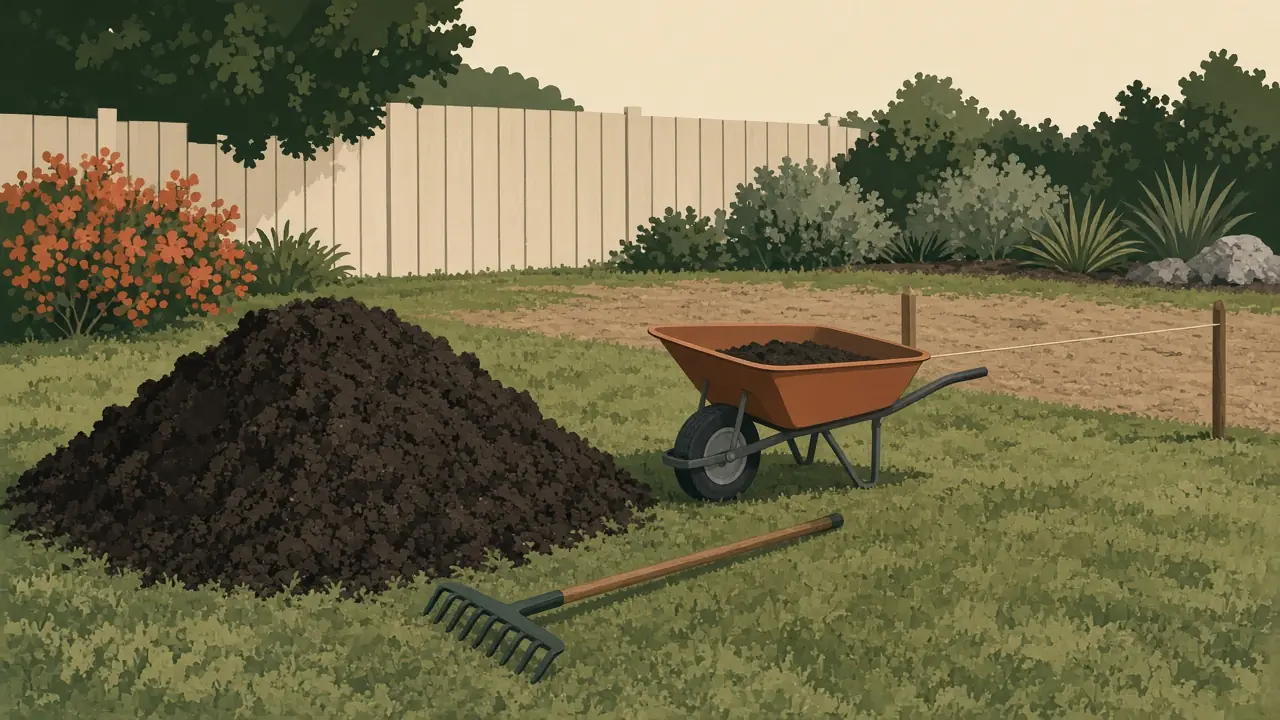
How the calculator works
- Area of the shape in square feet. For an odd-shaped yard, split it into rectangles and triangles and run each one, or total the area first with the square footage calculator.
- Volume: area × depth in inches ÷ 12 = cubic feet; ÷ 27 = cubic yards. Bulk topsoil is sold by the cubic yard.
- Bags: cubic feet ÷ the bag size printed on the bag, rounded up.
- Weight: cubic yards × weight per cubic yard. This matters for a pickup's payload or a trailer. The default 1.10 tons per cubic yard is one supplier's published figure for dry screened topsoil, about 2,200 lb per yard. Damp soil is heavier.
Worked example
2 in of topsoil over a 20 × 15 ft area before seeding:
- Area: 20 × 15 = 300 ft²
- Volume: 300 × 2 ÷ 12 = 50 ft³, which is 1.85 yd³
- Plus 5%: 52.5 ft³ = 1.94 yd³
- In 0.75 ft³ bags: 52.5 ÷ 0.75 = 70 bags (53 one-cubic-foot bags)
- Weight: about 1.94 × 1.10 ≈ 2.1 tons, over 4,000 lb. Check the payload rating on your truck's door-jamb sticker before you haul it yourself.
How deep to spread it
- Over existing grass, go thin. Clemson's Home & Garden Information Center advises topdressing an established lawn no more than about ¼ to ½ in at a time, so the grass can grow through. Fill deeper dips in stages, or lift the sod, fill under it and relay it.
- Bare ground, new lawn or new bed: spread the depth you need, then rake and lightly firm it. Loose soil settles, which is what the extra allowance covers.
- Near the house, keep soil below siding and away from wood, and slope it away from the foundation. The yard-leveling guide explains the 6-inch-in-10-feet rule.
Assumptions
- Bag sizes vary, so use the number printed on yours. A “40 lb bag” is a weight, not a volume. If the bag only lists weight, the calculator can't convert it reliably.
- “Topsoil”, “garden soil” and “fill dirt” are different products. Fill dirt is for raising grade. Topsoil and garden soil are what grass and plants grow in.
Before you dig or regrade.
Call 811 before any digging, even shallow regrading with a rented tiller. Lift with your legs and use a wheelbarrow for anything more than a few bags.
Sources
- Clemson Cooperative Extension, Topdressing a home lawn.
- New York Rock Supply, Yards, tons and calculators (screened topsoil about 2,200 lb per cubic yard; supplier's own figure).
- Common Ground Alliance, Call 811.
How this page was made. Jordan Hale is the author and is responsible for this page. An AI assistant helped write the code, gather manufacturer data and draft the explanation. The math is covered by automated tests against the published reference values cited below. The calculator gives a planning estimate. It does not replace the product label, your supplier or an engineer. The illustration on this page is AI-generated and shows the general idea, not exact construction details.