
Walls & ceilings
How to remove wallpaper
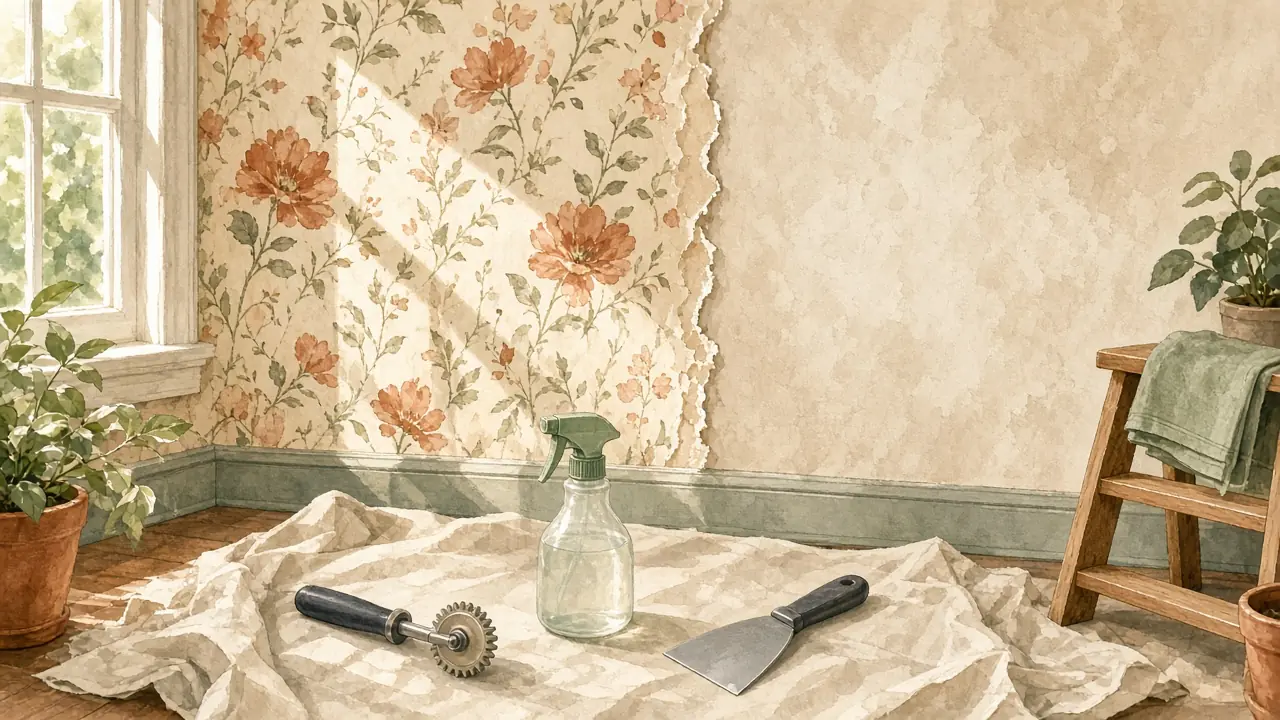
Wallpaper comes off cleanly when you match the method to the paper: peelable faces lift dry, vinyl and coated papers need scoring so liquid can reach the paste, and older layers may need more dwell time or steam. Rushing with a sharp blade is what shreds the drywall face paper and turns a weekend into a skim-coat project. This guide follows manufacturer stripper instructions (Zinsser DIF / Rust-Oleum) and EPA lead-safe habits for older homes.
Before you scrape or sand: homes built before 1978 may have lead-based paint under or beside the wallpaper. Disturbing paint by dry scraping or sanding can release lead dust. The EPA’s DIY lead-safe steps are: test or assume lead is present, contain the room with plastic, keep kids and pets out, mist to keep dust down, and clean with wet wiping plus a HEPA vacuum—not dry sweeping. See the EPA’s lead-safe renovation guidance linked in Sources. Wear eye protection and gloves; open windows for ventilation when using stripper.
1. Identify the wallpaper type
Try a low, inconspicuous corner first:
- Lift a corner with a putty knife. If the decorative layer peels away in large sheets and leaves little paste, you likely have strippable or peelable paper (or a peelable top film over a backing).
- If only a thin vinyl face comes off and a paper backing stays stuck, peel the face where you can, then wet the backing (step 4).
- If nothing lifts dry, you have non-strippable paper or paint-over-paper—plan on scoring + stripper (and possibly steam).
Multiple layers are common in older houses. Remove one layer at a time; never dry-sand through several coats of painted paper in a pre-1978 home without lead-safe setup.
2. Protect floors, trim and outlets
- Move furniture to the center or out of the room. Cover floors with plastic or canvas drop cloths; Zinsser’s DIF sheet says to spread a solvent-resistant drop cloth and protect carpeting and porous ceilings.
- Turn off power to the room at the breaker, then remove outlet and switch covers. Tape over the devices so stripper does not drip inside boxes.
- Lay a trash bag or bin nearby for wet scraps—paste stays sticky.
3. Score only when the face blocks liquid
Scoring makes tiny holes so stripper reaches the adhesive. Rust-Oleum / Zinsser recommend a PaperTiger-style tool: roll it over the surface without pressing hard enough to cut the drywall paper. Skip aggressive scoring on obviously peelable paper you can lift dry—extra holes just mean more patching later.
4. Wet with stripper (or steam)
Zinsser DIF Liquid Concentrate instructions (typical workflow):
- Mix per the label (the TDS notes about 10 oz / 1¼ cups of concentrate per gallon of warm water for the gallon size; ready-to-use sprays skip mixing).
- Working top to bottom on one section at a time, spray, roll or sponge the solution onto the paper. Do not use a fine mist sprayer.
- Wait about 15 minutes, then apply a second coat. Rewet a small section and scrape.
- For leftover paste, reapply, wait another 15 minutes, then scrape or sponge. Rinse with clean water when the wall is clear.
Enzyme strippers dissolve paste; plain hot water helps some papers but is slower. A wallpaper steamer is a backup for stubborn spots—keep the plate moving and avoid soaking one area until the gypsum face softens.
5. Scrape carefully
Use a wide, blunt wallpaper scraper (Zinsser’s Paper Scraper is angled to reduce gouging) held nearly flat. Push under loosened paper; do not dig with a razor at a steep angle. If the paper fights you, rewet—fighting dry paper shreds the brown face paper on the drywall, which then needs skim coating.
Bag scraps as you go so you are not walking paste through the house.
6. Rinse, dry, repair and prime
- Wipe the wall with clean water and a sponge to remove stripper residue and paste haze.
- Let the wall dry fully (often overnight). Cool, humid rooms take longer.
- Patch nicks, torn face paper and nail holes with joint compound or spackle. Torn face paper: glue loose edges flat, then skim. Larger holes are covered in how to fix a hole in drywall.
- Sand lightly when dry—mist and use lead-safe cleanup if the home is pre-1978 and you are sanding old paint.
- Prime before paint or new wallpaper. A stain-blocking or wallpaper primer seals residual paste and evens porosity so new paint does not flash. Then use the paint calculator and how to paint a room for coating the room.
When to call a pro
- Several painted-over layers in a pre-1978 house where lead is confirmed or likely.
- Plaster walls that crumble when wet, or drywall face paper already shredded across large areas (skim coat or re-rock may be cheaper than fighting it).
- Commercial vinyl murals or adhesives that ignore stripper after repeated wetting.
Related
- How to paint a room — after priming.
- Paint calculator — gallons for two coats.
- How to fix a hole in drywall — patches before paint.
- Walls & ceilings guides — more wall projects.
Sources
- Rust-Oleum / Zinsser, How to remove wallpaper without a steamer: score, apply DIF, wait, scrape, rinse, prime.
- Zinsser, DIF Liquid Concentrate Wallpaper Stripper technical data sheet (PDF): mix ratio, 15-minute dwell, reapply, ventilation, drop-cloth prep, PaperTiger / Paper Scraper notes.
- US EPA, Lead-safe renovations for DIYers and Renovation, Repair and Painting Program: contain, mist, protect, wet-clean, HEPA—especially in pre-1978 homes.
Questions worth answering
Should I score every wallpaper?
Only if the face film will not let water through. Zinsser's DIF instructions say: if the top layer does not peel off easily, score with a PaperTiger so the stripper can penetrate—the more holes, the better. Do not dig deep enough to cut the drywall paper underneath.
Will a steamer damage drywall?
Steam works on stubborn adhesive, but too much heat and water can soften joint compound and blister drywall face paper. Work in small sections, keep the steamer moving, and stop if the gypsum face starts to pill. Many rooms come off cleanly with a enzymatic stripper (such as Zinsser DIF) and a blunt scraper without steam.
Can I paint over old wallpaper instead?
Only if it is firmly bonded, smooth, and you accept seams that may telegraph. Most paint makers and stripper makers still recommend removing paper and adhesive, then priming, before a lasting paint job. Loose, bubbling or vinyl paper should come off.