
Walls & ceilings
How to paint a room
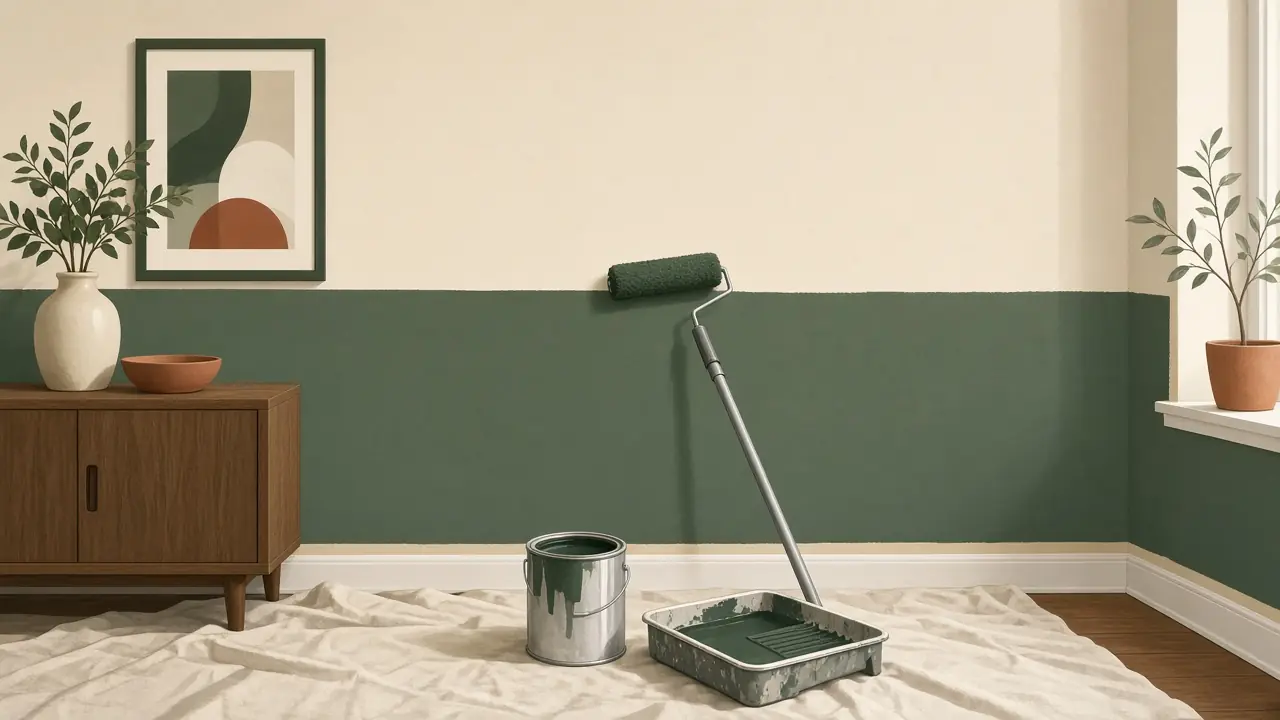
Painting a room is mostly preparation. The rolling goes quickly; cleaning, patching, masking and priming are what make the finish look even and last. This guide follows the instructions on a typical paint maker’s data sheet. The can you buy has its own, and where they differ, the can wins.
Before you start: if your home was built before 1978, the old paint may contain lead. Sherwin-Williams’ data sheet warns that scraping, sanding or removing old paint can release lead dust, which is toxic, especially to children and pregnant women. Test first, and follow the EPA’s lead-safe guidance if it’s positive. Keep windows open or use fans while you paint and while it dries.
Work out how much paint you need
Measure the walls and count doors and windows, then use the paint calculator. It works out gallons and quarts for two coats by default, at 350 ft² per gallon, the low end of the 350–400 ft² Sherwin-Williams lists for its interior paints. If you’re hanging new drywall first, the drywall calculator covers sheets, compound and tape. Still have old wallpaper? Remove it first with how to remove wallpaper, then prime.
Tools and materials
- Paint and primer (if needed)
- A 2–2½ in angled brush for cutting in
- A roller frame and cover, extension pole and tray. Sherwin-Williams suggests a ⅜ to ¾ in nap synthetic cover for its SuperPaint; use the shorter nap on smooth walls and longer on texture.
- Drop cloths, painter’s tape, a putty knife, spackle or joint compound, a sanding sponge
- A ladder or step stool
1. Clear and protect the room
Move furniture to the middle and cover it, and cover the floor with drop cloths. Turn off the power to the room at the breaker, then remove outlet and switch covers. Tape over the devices, or leave them and paint carefully around them.
2. Clean, patch and sand
The data sheet’s surface prep comes down to clean, dry and sound:
- Wash off dirt and grease with a suitable cleaner, rinse, and let it dry.
- Scrape and sand peeling or cracked paint back to a sound edge (see the lead warning above).
- Fill cracks and holes with spackle or joint compound and sand smooth once it’s dry. Bigger holes are covered in how to fix a hole in drywall.
- Dull glossy surfaces with a light sanding so the new paint can grip.
- Remove mildew before painting. It looks like dirt but won’t wash off; use a mildew remover and follow its safety instructions.
- Wipe off the sanding dust.
3. Prime where it’s needed
Prime new drywall, patched spots, and stains from water, smoke, ink or grease. The data sheet says stains should be sealed with a suitable primer-sealer, or they can bleed through. Gaps between walls, ceiling and trim can be caulked after priming.
4. Cut in, then roll
Paint in this order: ceiling, walls, then trim.
- Cut in: with the brush, paint a band 2–3 in wide along the ceiling line, corners, and around trim, doors, windows and outlets.
- Roll the walls while the cut-in edges are still wet, so they blend. Load the roller evenly in the tray, start a few feet from a corner, and roll in overlapping vertical passes, working back into the wet edge.
- Don’t stretch the paint. Spreading a gallon over more area than the label says leaves a thin coat that won’t hide. That’s what the coverage figure is for.
5. Second coat
Wait for the recoat time on the label: 4 hours at 77°F and 50% humidity for Sherwin-Williams’ interior latex lines. Cool or humid rooms take longer. Then cut in and roll again. Most data sheets specify two coats.
6. Clean up
Pull the tape while the last coat is still slightly soft so it doesn’t peel the paint. Clean brushes and rollers with soap and warm water for latex paint. Keep leftover paint, sealed and labeled, for touch-ups. Don’t pour paint down drains; ask your local waste service how to dispose of it.
Sources
- Sherwin-Williams, SuperPaint Interior Latex product data sheet (PDF): coverage, recoat time, application temperature, roller nap, recommended systems, surface preparation and the lead warning.
- Sherwin-Williams, Paint calculator FAQ: a gallon covers about 350–400 ft².
- US EPA, Lead renovation, repair and painting and Protect your family from sources of lead.
Questions worth answering
How long should I wait between coats?
Check the can. Sherwin-Williams' interior latex paints list a 4-hour recoat time at 77°F and 50% relative humidity; cooler or more humid air, or a thicker coat, takes longer.
Do I need primer?
On new drywall, bare patches, stains, or glossy or very different colors, usually yes. Sherwin-Williams' SuperPaint data sheet calls for one coat of primer under two coats on new drywall, or two coats of the paint as its own primer. The label on your paint says what it recommends.
Should I paint the ceiling or the walls first?
The usual order is top down: ceiling, then walls, then trim, so drips land on surfaces you haven't painted yet.